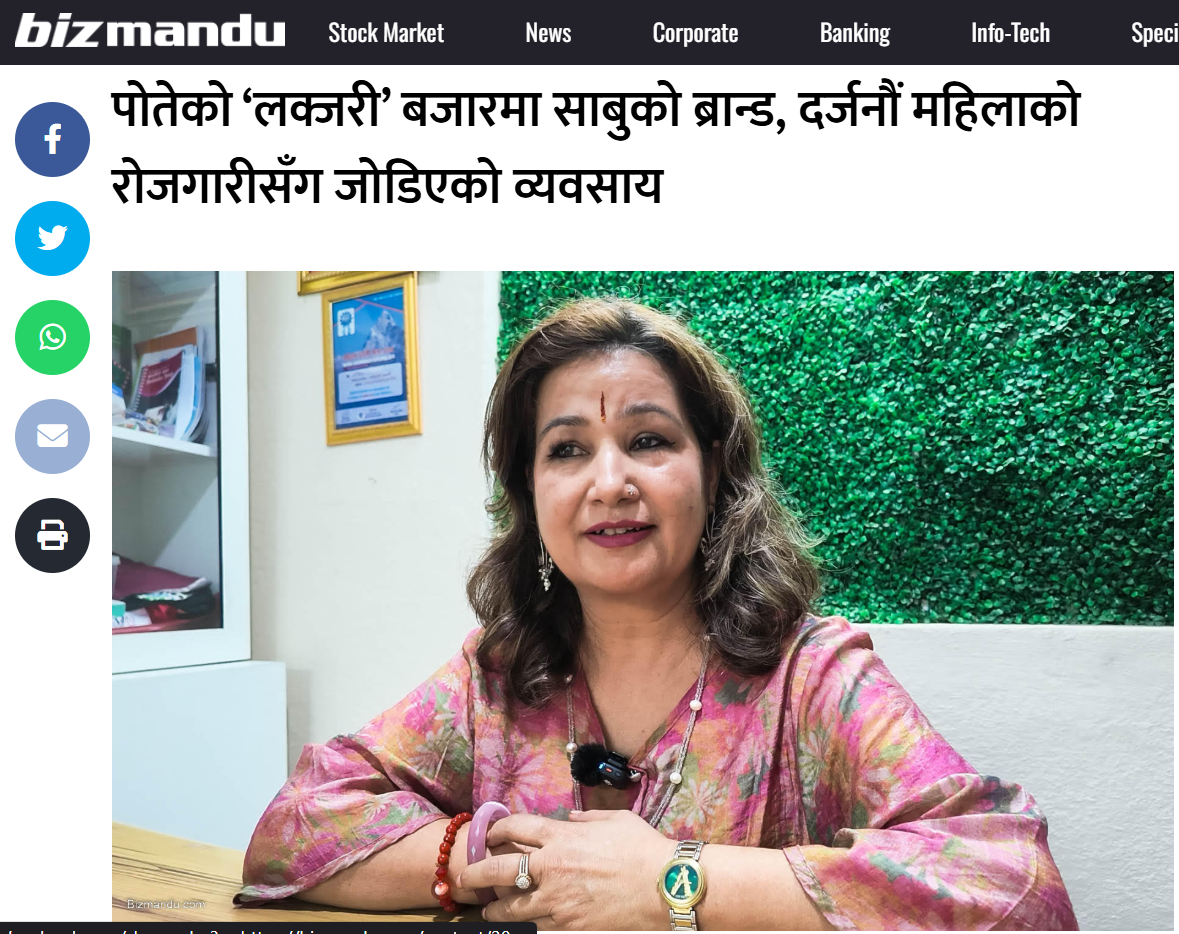
पोतेको 'लक्जरी' बजारमा साबुको ब्रान्ड, दर्जनौं महिलाको रोजगारीसँग जोडिएको व्यवसाय [Sabu’s Brand in the Luxury Pote Market: Empowering Dozens of Women Through Social Enterprise]
पोतेको 'लक्जरी' बजारमा साबुको ब्रान्ड, दर्जनौं महिलाको रोजगारीसँग जोडिएको व्यवसाय
टुना भट्ट
२०८३ भदौ २६ (Sep 11, 2026) | बिजमान्डू
काठमाडौं। भोटेकोशीमा आएको विनाशकारी बाढीबाट प्रभावित महिलाका लागि साबित्री पौडेल (साबु) ले राहत सामग्री र प्याडवेयर प्रभावित क्षेत्रमा पठाइन्। आफैं पनि प्याडवेयर लगायत सामान लिएर पुग्दैछिन्।
बाढीले घरबार, सम्पत्ति र आफन्त गुमाएका मानिसका अनुहारमा उनले देखेको पीडा उनका लागि नौलो थिएन। विपद्ले मानिसको जीवन कसरी एकैछिनमा उल्ट्याइदिन सक्छ भन्ने उनले आफैं भोगेकी छन्।
त्यसैले अहिले उनी राहतसँगै अर्को कुरा पनि सोचिरहेकी छन्। त्यो हो, विपद्मा परेका महिलालाई कसरी मानसिकरूपमा सम्हाल्ने र उनीहरूलाई फेरि आफ्नै खुट्टामा उभिन सक्ने बनाउने? साबुको यो सोच भोटेकोशी बाढी प्रभावितलाई देखेर आएको होइन, यसको जरा २०७२ वैशाख १२ गतेको विनाशकारी भूकम्पसम्म पुग्छ।
गोरखाको बारपाक केन्द्रविन्दु भइ आएको त्यो भूकम्पले काठमाडौं, काभ्रेसँगै धेरै जिल्ला प्रभावित भएको थियो। हजारौंको ज्यान गयो, लाखौंको जीवन प्रभावित बनायो। कसैले घर गुमाए, कसैले आफन्त त कसैले आफ्नै शरीरको अंग। साबुको परिवार पनि त्यसबाट अछुतो रहेन।
कलंकीस्थित एक व्यावसायिक भवनमा रहेका उनका श्रीमान् भूकम्पमा पुरिए। भवनमा रहेका ४० भन्दा बढीले ज्यान गुमाउँदा उनका श्रीमानसहित दुई जनाको भने जीवितै उद्धार भयो। जीवन त जोगियो, तर उनका श्रीमानले एउटा खुट्टा गुमाउनुपर्यो।
त्यसपछि सुरु भयो लामो अस्पताल बसाइ, उपचार र पुनर्स्थापनाको यात्रा। श्रीमानको उपचारसँगै साबु स्वयं पनि मानसिक तनावबाट गुज्रिइन्। तर अस्पताल र थेरापी सेन्टरमा बिताएका ती दिनले उनको जीवनको बाटो नै बदलिदिए।
श्रीमानको उपचारका क्रममा उनले शारीरिक अपांगता भएका थुप्रै महिलालाई भेटिन्। उनीहरूमध्ये धेरैलाई शारीरिक अपांगतासँगै आर्थिक समस्या पनि थिए। अस्पताल पुगेकी साबुले आफूभन्दा फरक किसिमको पीडा बोकेका महिलालाई नजिकबाट देखिन्।
"अस्पताल र पुनर्स्थापना केन्द्रमा रहँदा म शारीरिक र आर्थिक रूपमा सक्षम थिएँ, मेरो श्रीमान् शारीरिक रूपमा अपांगता भए पनि जीवित हुनुहुन्थ्यो। तर, मसँगै त्यहाँ थुप्रै दिदीबहिनीहरू हुनुहुन्थ्यो, जो शारीरिक अपाङ्गतासँगै आर्थिक समस्यामा पनि हुनुहुन्थ्यो। उहाँहरूलाई कसरी आर्थिक रूपमा सक्षम बनाउन सकिन्छ भन्ने सोच आयो," साबु सम्झिन्छिन्। त्यही सोचबाट जन्मियो, 'वी नेपाल क्राफ्ट'।
मानसिक उपचारसँगै सीप र रोजगारी
भूकम्पपछि अपांगता भएका महिलालाई मानसिक रूपमा सक्रिय राख्ने र उनीहरूलाई आयआर्जनसँग जोड्ने उद्देश्यले साबुले पोते बुन्ने काम सुरु गरिन्। पोते बनाउँदा हात र दिमाग दुवै एकाग्र हुनुपर्ने भएकाले मानसिक तनावमा रहेका महिलाका लागि यो उपयोगी हुन सक्छ भन्ने उनलाई लागेको थियो।
"भूकम्पमा परेर अपांगता भएका दिदीबहिनीहरूको मानसिक स्वास्थ्यमा सुधार ल्याउन र उहाँहरूलाई आर्थिक रूपमा सशक्त बनाउन व्यवसाय सुरु गरेँ," उनी भन्छिन्।
सुरुमा केही महिलालाई काममा जोड्ने र मानसिक रूपमा सबल बनाउने उद्देश्य मात्रै थियो। बजारमा माग बढ्दै गएपछि भने त्यसले विस्तारै व्यावसायिक रूप लिन थाल्यो।
साबुले त्यतिबेला सायदै सोचेकी थिइन्, आफूलाई र आफूजस्तै कठिन अवस्थामा रहेका महिलालाई सम्हाल्ने उद्देश्यले सुरु गरेको सानो प्रयास एक दिन पोतेलाई लक्जरी ज्वेलरीका रूपमा स्थापित गर्ने व्यवसाय बन्नेछ। अझ महत्त्वपूर्ण, दर्जनौं महिलाको आम्दानीको आधार बन्नेछ।
आज वी नेपाल क्राफ्टमा ४० देखि ५० जनासम्म प्रत्यक्ष वा अप्रत्यक्ष रूपमा जोडिएका छन्। काम काठमाडौं उपत्यकामा मात्र सीमित छैन। धादिङ, नुवाकोट, काभ्रे, बुटवल, पर्सा लगायतका जिल्लामा पुगेर महिलालाई निःशुल्क सीप सिकाउने काम भइरहेको छ।
पर्सामा पिछडिएका वर्गका महिलालाई निःशुल्क सीप सिकाउनेदेखि त्यहाँका बालबालिकालाई शिक्षामा पहुँच पुर्याउने उद्देश्यले विद्यालय सञ्चालनसम्मको काममा उनी जोडिएकी छन्। "व्यक्तिले गरेर सम्भव नहुने रहेछ, राज्यले गरे त्यो सफल हुन्छ। व्यक्तिले गर्दा कहिलेसम्म धान्ने भन्ने हुने रहेछ," उनी भन्छिन्।
बौद्धिक तथा शारीरिक अपांगता भएका बालबालिकाका आमाहरूलाई समेत सीप सिकाएर आयआर्जनमा जोड्ने प्रयास भइरहेको उनी बताउँछिन्।
कारखानादेखि घरमै रोजगारीसम्म
वी नेपाल क्राफ्टको विशेषता यहाँ काम गर्ने तरिका पनि हो। सीप सिकिसकेपछि सबैले कारखानामै पुगेर काम गर्नुपर्दैन। आफूलाई सहज हुने ठाउँबाटै पोते बुन्न सकिन्छ। अहिले करिब १० जना महिला बत्तीसपुतलीस्थित वी नेपाल क्राफ्टको कारखानामै आएर काम गर्छन्। अरू धेरैले भने घरबाटै पोते बुन्ने गरेका छन्। मध्यबानेश्वरस्थित पसलमा पनि शारीरिक अपांगता भएका महिलालाई रोजगारी दिइएको छ।
साबुको प्रयास वी नेपाललाई केवल व्यवसाय नभई सीप, रोजगारी र आत्मनिर्भरताको चौतारी बनाउने हो। "अरूले मलाई कठिन समयमा जसरी सहयोग गरे, त्यसैबाट मैले पनि अरूलाई सहयोग गर्नुपर्छ भन्ने सिकेँ," उनी भन्छिन्।
पाँच लाख रुपैयाँबाट सुरु भएको यात्रा
वी नेपाल क्राफ्ट सुरु गर्दा साबुसँग ठूलो व्यावसायिक योजना थिएन। भूकम्पको मानसिक आघातबाट आफू बाहिर निस्कने र आफूजस्तै अप्ठ्यारोमा रहेका महिलालाई केही सहयोग गर्ने उद्देश्य थियो। त्यसका लागि उनले श्रीमानसँग पाँच लाख रुपैयाँ लिएर काम सुरु गरेको बताइन्। सामाजिक उद्देश्यले थालिएको त्यही काम विस्तारै व्यवसायमा परिणत भयो।
तर साबुको व्यवसायिक यात्रा भूकम्पपछि मात्र सुरु भएको होइन। इन्जिनियरिङ अध्ययन गरेपछि विदेश जाने सोच बनाएकी उनी श्रीमानसँग जापान पुगिन्। त्यहाँ भाषा सिकिन्, काम गरिन् र केही वर्षपछि नेपाल फर्किइन्।
नेपाल आएपछि जापान जान चाहने युवालाई भाषा सिकाउने कन्सल्टेन्सीसमेत श्रीमान्–श्रीमतीले सञ्चालन गरे। समयले उनलाई इन्जिनियरिङबाट कन्सल्टेन्सी हुँदै सामाजिक उद्यम र व्यवसायसम्म ल्याइपुर्यायो।
Sabu’s Brand in the Luxury Pote Market: Empowering Dozens of Women Through Social Enterprise
By Tuna Bhatt
Bizmandu | September 11, 2026
Savitri Poudel (Sabu) recently dispatched relief materials and sanitary products to women affected by the devastating floods in Bhotekoshi—and she is heading to the affected areas herself to deliver further supplies.
The distress visible on the faces of families who lost their homes, property, and loved ones to the floods was not unfamiliar to her. Sabu knows firsthand how suddenly a disaster can upend a life.
Because of this, her focus goes beyond providing immediate relief: she is dedicated to offering psychological support to women in crisis and helping them regain independence. This approach was not just inspired by the recent Bhotekoshi floods; its roots trace back to the devastating earthquake of April 25, 2015.
The earthquake, centered in Barpak, Gorkha, severely impacted Kathmandu, Kavre, and several other districts—claiming thousands of lives and disrupting hundreds of thousands more. Families lost their homes, loved ones, and physical mobility. Sabu’s own family was not spared.
Her husband was trapped under a collapsed commercial building in Kalanki. Out of more than 40 people inside the building, only two were rescued alive, including her husband. While he survived, he suffered injuries that resulted in the amputation of one leg.
What followed was a long journey of hospitalization, medical treatment, and physical rehabilitation. As Sabu cared for her husband, she also endured severe emotional strain. However, the months spent in hospital wards and therapy centers ultimately reshaped her life’s vision.
During her husband’s treatment, Sabu met numerous women living with physical disabilities. Many of them faced severe financial distress alongside their physical challenges. Observing their struggles closely gave her a new perspective.
"While at the hospital and rehabilitation center, I had physical mobility and financial stability, and although my husband suffered a physical disability, he was alive," Sabu recalls. "However, there were many women around me facing both physical disabilities and extreme financial hardship. I began thinking about how I could help empower them economically."
That vision marked the birth of We Nepal Craft.
Mental Healing Through Skill Training and Employment
Following the earthquake, Sabu introduced bead weaving (pote making) to keep women with disabilities mentally engaged while generating income. Because crafting pote requires hand-eye coordination and concentration, she recognized its potential as a therapeutic activity for individuals recovering from emotional trauma.
"I launched this initiative to support the mental well-being of women who acquired disabilities during the earthquake and to empower them economically," she explains.
What began as a small initiative to engage a few women and foster emotional resilience gradually expanded into a full-scale commercial endeavor as demand grew in the market.
At the time, Sabu hardly imagined that an initiative started to help herself and other women recover from trauma would evolve into a luxury jewelry brand that elevates traditional pote craft while serving as the primary source of income for dozens of women.
Today, We Nepal Craft supports between 40 and 50 women through direct and indirect employment. Its impact extends far beyond the Kathmandu Valley, reaching districts such as Dhading, Nuwakot, Kavre, Butwal, and Parsa, where free skill-development workshops are conducted.
In Parsa, Sabu’s work encompasses providing free vocational training to marginalized women as well as supporting local community initiatives. "Individual efforts have limits," she notes. "State-backed initiatives achieve long-term sustainability, whereas individual efforts face resource constraints."
She is also focused on training mothers of children with intellectual and physical disabilities, helping them build sustainable livelihoods.
Flexible Employment: From Workshop to Home
A key feature of We Nepal Craft is its flexible work structure. Once trained, artisans are not required to work on-site at a central facility; they can weave pote from wherever it is most convenient for them.
Currently, around 10 women work directly at the We Nepal Craft workshop in Battisputali, Kathmandu, while many others produce crafts from home. Additionally, women with physical disabilities are employed at the brand’s retail outlet in Madhya Baneswar.
Sabu’s vision for We Nepal Craft goes beyond business—she aims to build a supportive community centered on skills, employment, and self-reliance. "The support I received during my hardest times taught me the importance of giving back to others," she says.
A Journey Started with NPR 500,000
When launching We Nepal Craft, Sabu did not start with a large corporate plan. Her primary goal was to process her own trauma from the earthquake while extending a helping hand to other women facing adversity. To begin, she borrowed NPR 500,000 from her husband—a modest sum that laid the foundation for what quickly grew into a thriving social enterprise.
Sabu’s entrepreneurial trajectory began well before the earthquake. After earning her engineering degree, she moved to Japan with her husband, where she studied the language, gained work experience, and eventually returned to Nepal.
Upon returning, the couple operated a consultancy offering Japanese language training to youth aspiring to study or work abroad. Over time, her career path evolved from engineering and consultancy into social entrepreneurship and business leadership.